I must say … Their FAQ page certainly answered my frequently asked questions (ipso facto!), and even a few infrequently asked ones. 
OMG…everything on offer there from rebabs to sporrans, from harps to helmets!
Quite the universal supplier. And the writeups are rather, umm, interesting.
Not totally uninformed, just somewhat awry.
But it is good to hear they are improving some aspects of flute quality. I’ve found it mystifying that, despite offers of help, these makers justify sales of learner-crippling flute shaped objects by saying that, what the heck, they’re good enough to sell anyway. A truly pathetic response. Maybe some are beginning to see the light or recognize the tunnel.
Way far long ago I bought a keyless Pakistani flute, and having some experience modifying cheap recorders, treated it as essentially a “flute blank for the do-it-yourselfer”. I did what I could then and got it to play in tune with itself and others, and could now do at least twice as well with the embouchure hole. But it got passed along in trade and played for many years, maybe still in action. But I pity the fool who got one and thought this suckah was a ready instrument (obscure Mr. T reference here…)
The case seems OK but not great. I’m not a big fan of cases that are kind of heavy and require a cover to protect them.
I modified a pretty standard, inexpensive thermoplastic Boehm case to look good inside and function even better.
Way less troublesome and you can happily shove it into a daypack without worries.
If there were enough market I might be tempted to go into production. But I doubt it somehow.
P.S. Edit:
(Having missed the later posts)
After looking at Jem’s photos…
You have GOT to be kidding me!
I mean, what the ****!
I’ve seen tidier work on wooden shipping crates.
The embouchure hole…I’m speechless.
Well. If the basic parameters are sort of OK, probably fixable.
But good grief, what happened to minimal pride of workmanship?
Kidding?  Appearances can be deceiving!
Check this out: Q1T flute “as is” demo.
I think you may be surprised…
Jem, you’re quite right.
I am amazed. Really quite good aprart from the tuning around C.
And all the way up to 3rd register G…surprising.
Please do post another clip when you get it cleaned up and adjusted.
I’m very curious to see whether there is a significant improvement.
I’m also curious whether bore smoothness affects the overall tuning.
Since there’s no slide, this should be easy to determine.
Here’s the thing about Q1T. They have access to some First World technology, notably laser engraving and at least a CNC Mill. However, they are definitely in it for the money! Proceed with caution! As it happens, they sell drone reeds, milled on a CNC machine and tongued with carbon fibre, which happen to match the bores of my drones, and played acceptably out of the box. However, there is no such thing as a ‘one size fits all’ in the piping world and so my purchase of these reeds on a lark, paid off, but for another, might not. I can’t tell if they have a CNC Lathe, not having examined up close any of their flutes. But I will say, that if they get their act together on First World QC, they will become a threat to some of our western cottage industry craftsmen.
Bob
And the sequel - post-tweak/tidy-up Q1T demo clip. Apart from saying that I don’t think bore smoothness has (or would) affect tuning (though I’d expect it at least potentially to affect tone quality and response), I’ll let it speak for itself. Photos to follow…
Question for you Jem. Do you think the bore would profit by a resin treatment like Maurice Reviol uses?
Bob
I’m not sure without going to check exactly what Reviol does… I daresay some kind of bore sealant which also filled the texture of the wood might be a good idea from a water-proofing angle (like the marine epoxy being discussed elsewhere in the Forum currently), but whether it would have any significant effect on the sound (other than in reducing build-up of condensation in irregularities) I wouldn’t like to guess. Whatever, I’m not planning to spend that much extra effort on it. I do think there are signs that the tone and embouchure holes may in fact have been sealed in some way (to seal the exposed end-grain?), actually contributing to their roughness!
Q1T flute after tweaking!
Embouchure
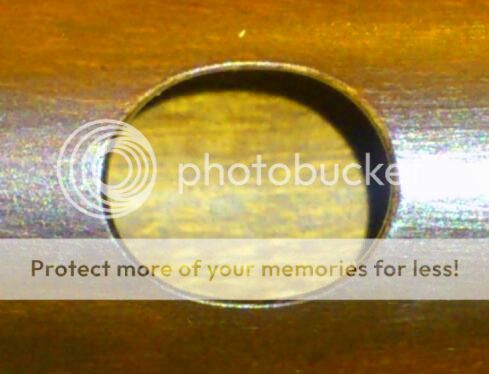
View to working side of embouchure - it is perfectly smooth - the marks which look like scratches are not - they’re colour chnages in the grain.
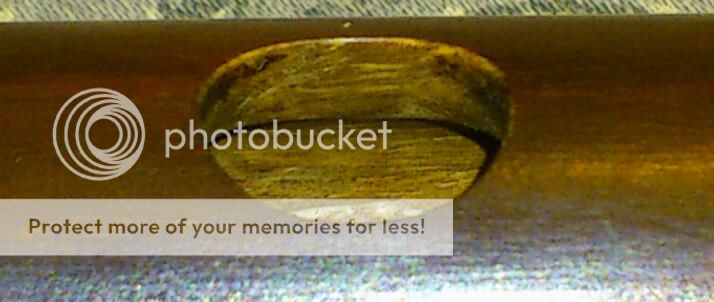
Tone-holes
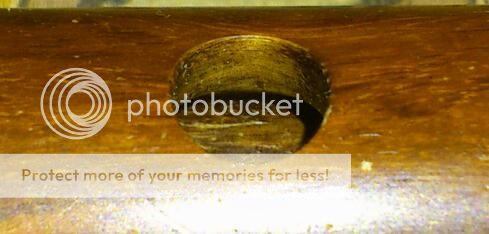
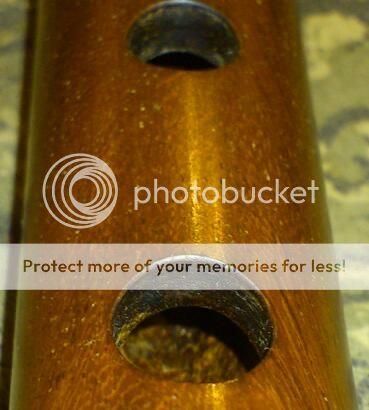
Head bore
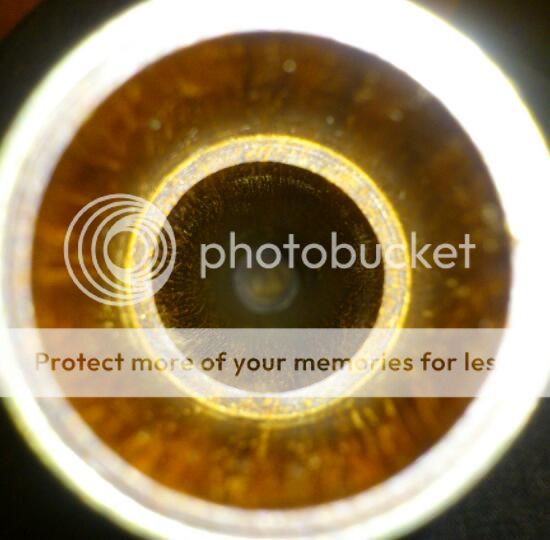
Body bore from head end (flash causes reflections in the pitting and grain striations in the bore which look like protrusions, but they’re not…)


Body bore from foot end, non-flash

Jem, thank you so much for posting the “post tweak” clip.
It might be influenced by expectations on my part, but it seems smoother and probably slightly more responsive as a result.
Very nice work as seen in the photos!
That sounds about 1000 times better than the Pakistan made flute I tried to clean up about 10 years ago…it never sounded better than an ajar car door on the freeway at best.
Interesting.
Eric