My comments about flute tuning reflect my overall attitude about perfectionism in general. Perfectionism can help you make a great flute, by spending hours doing the fine tuning, for examle. Perfectionism can also mess up your life if you require everything and everyone to be perfect in order for you to be content.
I am having to learn this hard lesson myself. The truth is that there is a lot of imperfection in the world about us. When we play with other amateur musicians, we are bound to hear much that isn’t perfect. How we react to that imperfection is what is important. My goal is to be able to hear someone play something badly and still be relaxed and accepting of that person and what they have to offer.
I once heard the phrase “uneccessary accuracy” being used about engineering production - working to tolerances of 0.001mm when 0.01mm would suffice.
“uneccessary accuracy” in music is a bit more subjective. With regard to tuning I would have to agree with David Levine when he says “Worry..a lot”. And here is my back-up anecdote.
I was standing on the pier in Helensburgh a few weeks ago on an unusually sunny Scottish Saturday, watching the World’s last sea-going paddle steamer, The Waverly, pay its weekly visit to the town. The pier was crowded with locals and tourists, and 2 pipers turned up to entertain…and their tuning was shocking! Now, as popular as the pipes are in Scotland, I reckon I was probably the only other piper present on the pier and other than any other sharp-eared music lovers, probably the only one who was offended by the hideous lack of tuning. So if 200 people were entertained and only a handful of people were offended, would further tuning-up have represented “uneccessary accuracy”?
It seems to me that being able to hear whether one is in tune or not would be extremely important. As I believe David Levine pointed out, this will take a lot of pratice. As Doug pointed out, perfectionism can mess up your life—it can make you stop practicing. So for me it is good to hear that one can get better at listening, that improvement is possible. The trick is, of course, not to despise what you are doing at the present time but take pride in small improvements. I really think that this is what people who are able to difficult things well have mastered. They strive for perfection (not attainable, I realize) but they don’t let imperfection discourage them unduly. They can enjoy what they are able to do while still working to be better.
Everyone seems to have assumed that your flute is in standard D pitch (for wooden flutes) and that you are playing with ‘standard pitch’ instuments e.g. not in a with ‘Eb’ box. Fair enough.
But of course if this is not the case there’s a whole bigger problem.
You adjust the tuning slide to tune the first octave. I recommend tuning the bottom D, blowing it to the “edge” of the octave jump.
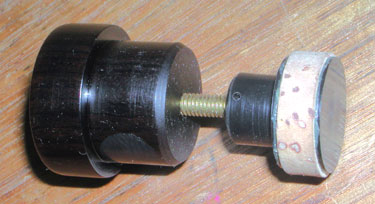
The second octave is tuned by the placement of the cork in the head end. I suggest tuning first octave G to octave G or B to octave B, if the octave is flat, move the cork towards the blow hole, if sharp, move it away from the blow hole.
I tune bottom and octave D. I’m not a flute player, but I have attempted it and I find the A to be one of the most “rubbery” notes on the flute and you need the embouchoure (SP) just right to get it in tune. G is a more “solid” note.
AP Instrument tuner for Windows can be a great help as it has a setting for just intonation tuning, rather than equal temperament like most electronic tuners.
The ear likes just intonation better than equal temperament and you can play with the pipes easier with J.I.
This is a great thread and I’m glad to see it resurrected. But this is just wrong:
You adjust the tuning slide to tune the first octave. I recommend tuning the bottom D, blowing it to the “edge” of the octave jump.
You’d never tune to the bottom D. Many flutemakers like a slightly flat D. It sounds better to them. If you tune to your bottom D the first octave will be out. And the business about tuning the second octave with the cork would lead to more problems than it would solve.
But you’re absolutely right about the A (sorry Berti- I’m sure you know better now). I only tune to A if I absolutely have to. G is much more solid. If it’s appropriate I’ll ask the concertina player (that’s the best scenario) for his G and tune to that. A wet box is another problem. We won’t go there.
In any case, the tuning slide is really only good for that one note, at that particular time. Start playing and everything changes. Flute players have to listen and adapt as they go, as everything is changing in a session - especially in a session with more than four or five players.
And finally, isn’t Doug Tipple a saint? Do you think a career in politics would corrupt him?
Never say never! Can a recommendation be “wrong”? Yes, for some players, no for others. Players are different beasts, just as are flutes, pipes, whistles, etc.
That is done on purpose,
If you don’t put the “edge” on the bottom D, you are right, bottom D is flat. Don’t go for the “pure” or sine wave D with no A overtone. That is what you get if you try to play softly.
Tune to the “hard D” or blow hard with a very focused lip opening (and the lips very close to the far edge of the blow hole or learn the “pouting fish” lip opening like Kieran O’Hare and Seamus Egan use) and right against the octave jump so that you can hear the A overtone in the note. Then, it will be “in tune”.
The pipes are tuned the same way, the “soft D” is flat and the “hard D” is in tune, at least with the 3 chanters I own.
My lips got sore when I had my flute (an early M&E) and it was so much harder to play than my pipes. The flute made my neck and right arm hurt too as I had to use the pipers grip to make the reach and I never could find a comfortable way to hold and balance it so that I could make a B roll.
The suggestion about the cork tuning the octave came from M&E flutes and Terry McGee and Terry makes it easy with a screw top on the head end.
You have to retune the first octave, check second octave and go back and forth until you have the best tuning in both octaves requiring the least amount of embouchoure change.
That’s assuming you don’t play in the third octave, of course, then more compromise and lip changes are needed.
Of my own experience, to tune a flute, one first needs to tune one’s self, such that the flute could then follow. Your embouchure simply presents your tuning to the embouchure of your flute, and tells it what to do. Mechanical adjustment, flatter or sharper, can be made by moving the tuning slide out or in, respectively, but the final tuning adjustment is uniquely yours. Therefore, tune yourself first!!
How I have done it, as a morning ritual, is to strike an A tuning fork and then treat my ears to it, one at a time.
I found two ways to change, to draw my chin in slightly or jut it out slightly. If I drew my chin in, my octave blew flatter and if I jutted it out, the octave was sharper.
I could jump the octave with less jaw movement by drawing it in slightly, so I tuned my flute to the jaw tuck.
Cork, I have heard that practicing with “long tones” is a good way to get your “mouth where the pitch is” as well. You have to unlearn all the “classical” techniques if you have been classically trained.
The fluter in our band is a music major and it has taken several years to teach her to “blow loud and edgy” and to stop that pesky diaphram vibrato and learn finger vibrato. Once she learned the “huffing” style, she got a comment from the audience that she “kicked a$$ on the flute”. I saw her head swell about two inches…
Is playing exactly in tune always desirable in ITM? I’m trying to get a feeling for the C natural, and when I listen to recordings it’s not always what I’d call “in tune” in the sense I would use the term. Other notes as well, when it’s fiddles, but the Cnat especially in flute playing.
How much of the character of the music is intonation?
I’m not good yet at hearing when I’m out of tune. I’ll work on it. Is that for the sake of those with perfect pitch who’d be annoyed trying to play with me, or for the sake of the music itself?
I spell correctly because there’s a right and a wrong way to spell things. Is there also a right and wrong in terms of intonation, in the context of ITM?
It depends upon the ear training you have. ITM tends to use just intonation and there are several C naturals that are “in tune”. ITM tends to use the “blue” C natural more than the others (flatter that what a classically trained ear expects). Listen to uilleann pipes and listen to the C naturals against the drones. It usually starts slightly flat and rises to “no beats” between the note and the D drones.
A lot of it, and it can change within a few miles in Ireland, I am sure. In the old time jams I play each jam seems to have different intonations, depending on where they play and I try to play “in tune with” the other musicians. The Galax old time fiddlers has players from all over the US and the rest of the world and intonation will change from campsite to campsite.
The music itself, of course. Your ears will finally learn the intonation of who you are playing with. Rhythm and lift should come before the intonation, IMHO.
I don’t think I have perfect pitch, but I can tell concert pipes (D) from the flat pipes (Eb, C#, D, B and Bb pipes.
Other instruments are harder to tell the pitch/key, but I seem to recognise the modes of D instruments (which are actually C instruments because when you finger an A, it plays A=440 {plus 2cents if it is “in tune” with D drones}).
I wish I could spell correctly
For intonation, I think it’s “whatever floats your boat”.
If you are “in tune with” the other musicians, you are right, but the actual pitch can vary quite a bit and sound strange until your ears “get it”.
If you cannot recognize when you are out of tune, I’m not sure much can be done. It’s like when a singer sings out of tune; what can be done to promote that awareness if it isn’t apparent?
On the other hand, I think the more common problem is identifying being sharp from being flat. Here, the flutist has a distinct advantage. If you roll the headjoint outward, you sharpen the instrument; roll it toward you, and you flatten it. This ability to instantly tune (at least to some extent) allows one to test the tone to see which direction improves the pitch. After a reasonable time, it should become easier to identify whether or not you are on pitch. Beyond that, you can simply pull the headjoint in or out to adjust the pitch. I test it on E in both octaves, and then A in both octaves. From that point, forward, you can roll the headjoint as you play to make minor adjustments that may be necessary.
The finger-vibrato (literally waving the finger above the note to get a warble effect) is very popular in Irish music, especially with pipes. I use it, as well as the diaphram vibrato (especially on D, where the finger vibrato is not an option). it is a lovely sound when used judiciously, and keeps a sustained tone from becoming boring. Tones can never “speak for themselves,” because they are a product of how you produce them. Otherwise, you could play flute on a synthesizer.
Diaphram vibrato is extremely difficult on the pipes…
You can get vibrato on bottom D on the pipes.
I saw Paddy Keenan in Charlotte, NC a couple of years ago and he waved the chanter bottom in a circle around the popping strap and got a nice vibrato.
I keep forgetting which finger to use on the pipes for my vibrato as my C and D chanters require different fingerings, especially for A and C natural vibrato.
 Can a recommendation be “wrong”? Yes, for some players, no for others. Players are different beasts, just as are flutes, pipes, whistles, etc.