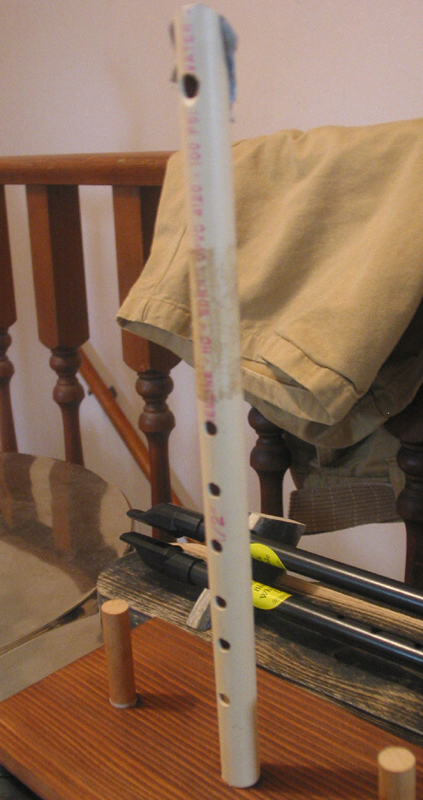
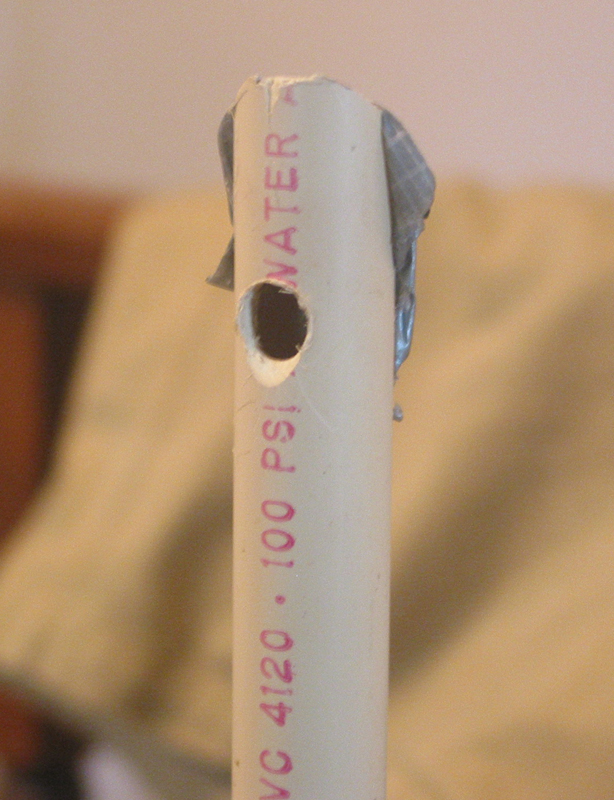
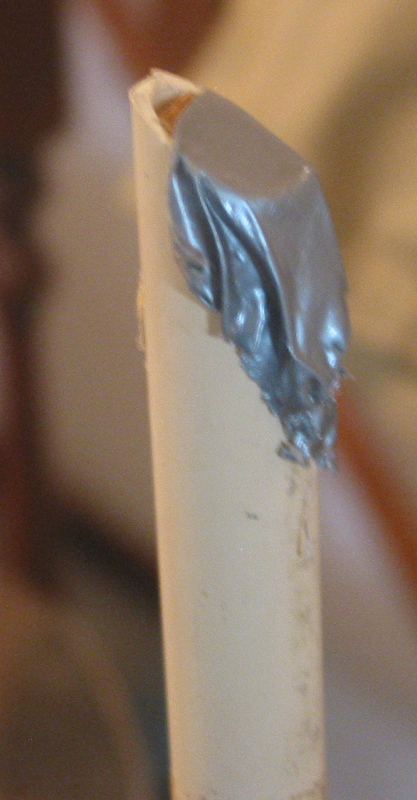
I just built my own penny whistle out of cpvc pipe. Previously I just made a body minus the mouthpiece. It goes through the full four octaves, quite shrill! I made the mouthpiece pretty much like a Clarke or shaw I would believe. It has the volume of a Walton’s little black whistle, but not finicky. It has some breath to it. It is a little mellower until the four octaves and you can distinguish each note up that high too! If you do need the fourth octave well it is there! I’m going to see if I can make them out of aluminum pipe. But now I’m all out of spending money. blah.
Sure you’re excited about what you’ve done, but four octaves? I’ve never seen or heard a whistle that can do four (some will just about do three, but two is the more normal ‘useful’ range) and believe what you claim is acoustically virtually impossible. So perhaps you’ve got something mixed up there?
No I don’t think so. It does go to four. I’ve played the pennywhistle before and different ones. It sounds like a whistle, Its in the key of D and checked with a tuner. I’ll never seriously play the fourth though because it is so high but its fun to annoy people with! I don’t know how it goes to four, but it does. Got a blow a little hard there but it goes there! hehe. Don’t know if I can replicate that or not. I’m waiting to get some money to build the next one. I was like what? Four octaves!
Seriously though, good for you! There’s nothing quite like when you hear the sounds that the first whistle you make. I still get that feeling, but to a lesser degree, every time I voice a new whistle and play the first tune on it.The first was amazing.
Nope! I tested it again today by moving the wood block in the mouthpiece. It really matters where that is at or it doesn’t go to four octaves or even play. That’s why I said it might be hard to duplicate by making it on a bandsaw.
It’s a crappy sounding recording from my canon g2, but here it is. I start on the lowest octave. Notice it gets more breathy like a piccolo on the top octave or fourth. However I could not get to the highest D. so I guess it does not have a full four octaves but close! I couldn’t play it for very long though hehe.
OK-don’t do that again.
I’d suggest you not worry about those high “notes”. Two octaves is plenty for virtually all Irish tunes. Anything much higher is painful.
In the video, the notes in the first “octave” do go up the scale, although the last one is D6 (or higher), not C#6. The other sets of notes bounce all over the place and I’m not sure that any of them goes much above D7. Have you tried testing the pitch of the notes with a tuner? This is something you should be doing while you’re drilling the toneholes: drill them undersize to start, and enlarge them until the pitch is right, working from bottom to top.
That round window may not be serving you well. I would suggest carving it out to be rectangular, for starters.
Have to say I broadly agree with this. While I’ll go beyond Tunborough’s assessment and grant you have pitches above three octaves, there’s no consistent upward progression, nothing I’m hearing close to four, and nothing reliable anywhere close…
For something approaching reliable high harmonics, see my Holifield Low D Whistle video review (starting at 1:18), where I managed to get three octaves and a third of consistent upward progression despite still taking two goes to hit some of the notes. So maybe see if you can get that far on your high D without a single descending interval?
I knew you were one of those keyboard commando’s and very stubborn. Its four octaves. The canon g2 photography camera doesn’t pick it up that great as I’ve said in the previous posts and my camera is for photography not sound. I thought this was a better place to discuss but I’m gonna leave this site. I have better things to go and do. This is just the same old stuff. People hiding behind computer screens.