I’ve spent the last three weeks in the desert near
Taos–very primitive conditions, no electricity (except
some solar), we truck in water, and so beautiful
it’s heartbreaking. Also it’s very dry, usually about 13%
humidity. Lots of dust.
I brought along an older Dave Copley flute, blackwood,
brass lined head. I sold my delrin flute (a Seery)
a few years ago, because I liked the Copley’s sound
better and I figured it was tough enough for whatever
I might do with the Seery.
So the Copley is fine. Every day or so I put it in a plastic
bag with a damp paper towel, leave it there overnight.
Also I’m playing it a good deal. I don’t suppose this
proves much of anything but it does confirm my
feeling that blackwood flutes, especially when they
are a few years old and the wood has ‘settled,’
are tough critters.
I also brought along a Sweetheart cherry A fife, which is doing
fine too. I’ve done nothing to it but play it.
Hi,
I would leave it in the bag, when not using it, during the day also. It is amazing how fast they can dry out in that humidity. The trick is not t ohave the outside of the flute dry out more then the inside, as then you will get cracking. But all in all, Blackwood is tuff stuff!
Gosh, you are brave! I don’t think I would even bring a wood flute along. Then again, I don’t have any experience in looking after them so I don’t know how much they can take. I just have a hard time risking anything that cost more than $50.
I wouldn’t even take my Cochran delrin on a trip like that, let alone a nice blackwood flute! The perfect flute for the kind of trip you describe is the Tipple 3-piece - I always take mine on camping trips! I had a Copley for a while and, while it was a superb flute, I was constantly worried about cracking (ergo the Cochran). Jon C: I still LOVE it BTW!
Why would you be worried about taking the delrin flute? It is about as tough as anything you would need. Probably would serve well beating snakes out of your way.
In Flagstaff, AZ, I keep mine in the case, and the case in a giant zip lock bag. I don’t add a wet paper towel or anything to modify the humidity. Regular playing alone keeps the humidity inside around 65%, give or take. If I’m going on a trip and leaving the wood flute at home, I add a bit of moisture to my humidifier, though not sure if that’s necessary.
Has anyone considered using a watertight Pelican style case for these dry environments?
A watertight case might be fine if the case were opened daily, however any longer term storage in an airtight/watertight case will lead mold growth. The voice of unpleasant experiences on the topic talking here.
Thanks for the confirmation, Loren. I’ve hesitated buying a Pelican case because they’re expensive and I suspected that a totally air tight enclosure could get musty inside. My zip-lock bags usually get a few small holes after a week or so, allowing some exchange of moisture…
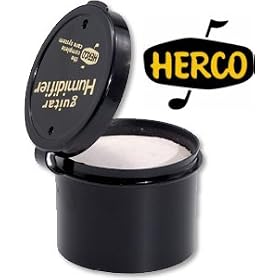
I’ve tried using a humidifier inside the gun case, but it’s so dry here I have to refill every couple of days to keep the humidity up. What I need it an almost air tight case that would slow down the loss of humidity to a point where the humidifier could be filled every couple weeks or so, but still allow some moisture transport.
The best humidifiers I’ve found are the Oasis brand (google them), however they are a bit large for most flute cases as they were designed for guitar and mando cases. I wish the guy who makes them would make a woodwind size version.
Some of the camera cases out there are just about perfect, if you could get the right humidifier. The case (I think) Sam Murray is currently using is a camera case that fits R&R’s just right, however I’ve been unable to find that exact same case size here in the U.S., nor have I been able to find the prattens size equivalent. I’m sure both are out there, I just need to do more searching.
I did that for a while too, but eventually mold starts growing in the sponge (even with distilled water), and I got sick one time from a moldy flute (lung infection), so I do anything to avoid the whole mold growing thing now. But that’s me, and most people never have a problem.
I like th oasis filters because they don’t leak, and so far seem very resistant to mold. They also humidify at a pretty constant rate, unlike most of the sponge type humidifiers I’ve seen or made. In addition, the gel crystals that hold water can be discarded and replaced yearly very inexpensively.
I’ve mentioned these before, but its been a while.
It’s called a Guard Father. You open the top and submerse it in water until it stops bubbling, then pour the water off, close the top, and put it in your case. Works great, and it’s cheap.
And don’t forget the humble orange. Remove the valuable outer casing and find something to do with the squishy bit inside. Some people are reported to have consumed this without apparent negative effects. Put some or all of the valuable outer casing in your flute case. Replace it when it has lost its attractive sheen.
(Disclaimer: I can’t vouch for what happens to case lining materials in contact with the peel. But I am assured that this trick works to tighten loose rings and tight keys.)
Leaving your flute mop in the case with the flute will help distribute the water mopped from within your flute (where it is a bad thing) to throughout your flute (where it is a good thing).
A stern reminder too that humidification is a good thing up to a point - the point being where moulds start to grow. Moulds are a matter not to be sneezed at, if you’ll pardon the pun. And nothing like a series of good deep breaths taken at the embouchure for distributing those moulds to the far reaches of your pulmonary system. If you are going to humidify, get yourself a hygrometer to keep in the case with the flute. It doesn’t have to be an expensive one, but compare it to an expensive one in the shop to make sure it reads about the same.
Unless you’re dealing with truly extreme dryness or humidity swings in your immediate environment (or taking flutes on extreme vacations, as Jim has done), most of these humidity methods are a slippery slope - you falsely level the humidity (meaning that it’s different from whatever air you actually breathe), and then you need to monitor the flute conditions constantly in order to maintain this level. Problems occur when there are radical changes, so any failure to maintain this level puts the non-acclimated flute at risk of overswelling and mold, or rapid shrinkage (gratuitous Seinfeld reference). But even a level humidity in your case doesn’t stop the real world from intruding when you take the flute out and play it places not as well regulated.
Fortunately, well-seasoned flutes, especially blackwood flutes, seem to handle a reasonable amount of environmental give and take. As in many aspects of life, the more you worry and fuss over them, the more likely you’ll push it over the edge. Personally, I think it’s best to let flutes acclimate to the air around you - assuming the air around you is not causing you undue dryness or fungi growth. Play them often, and leave the swab (as Terry suggests) in your case (which, as Loren says, should never be airtight). More than likely, your flute will be fine.
As for Jim’s desert adventure, let’s all enjoy his experiment, on his dime. My bet - if he doesn’t pass out himself under direct sunlight - is that his blackwood flute will survive just fine.
We arrived back in ST. Louis yesterday afternoon.
Drove for two days, through NM, Texas, Oklahoma
and into Missouri.
The humidity here is about 60, compared to about
15 in Taos.
FWIW, the flute is fine.
I will add irrelevantly but from the heart–
how beautiful beyond imagining northern NM
is! I hope you’all will check it out if you haven’t been there
already.
Out of curiosity, what’s your target humidity? What humidity favors molds and when do the rings start to loosen up?
I target around 60 to 65%, and haven’t had trouble with either, but perhaps I’m monitoring it too strictly. Also, if I could run the humidity around 50-55%, I could probably get away without the zip lock bags.
How do really high end polymer flutes compare to blackwood. I own a nice delrin for traveling, but what I’m really refering to are top-of-the-line makers using delrin to make a flute. Terry Mcgee offers polymer as an alternative material, at the same cost and with same construction as his wooden flutes. I presume Terry would make a polymer flute with block mounted keys and the whole ball of wax (please correct me if I missed the mark here Terry, just going off your website). Is there a significant enough difference between the materials to justify the extra hassle and worry of maintaining a wooden flute. You could probably throw the polymer in the dishwasher every few months or so to give it a good cleaning.
I think the answer is yes. I do prefer to play my wooden flute over my delrin. Then again, I think my wooden flute is a cut above the delrin. Just wonder if anyone has experience with a really high end polymer.