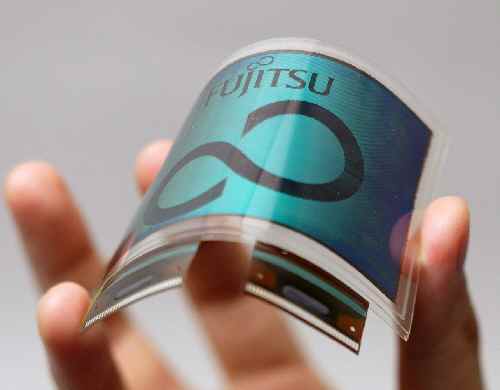
When working for Adobe rather a few years ago, I got to play with a “slate” with PostScript and some very simple control pads. Basically, it was like a page in a book, with some very nice options for hypertext and the like. One could stretch out on the floor, sit back in a chair, whatever and it felt like reading a book. John Warnock, then head of Adobe, is a book collector and was trying for a very elegant, book-like experience, even to near perfect reproduction of very old illuminated texts.
Since, though, it has gone much more to PDF readers which, while great for slogging text from one spot to another, isn’t nearly as nice a reading experience. I think I have a small library of many thousands of works by Shakespeare, Dickens and many others which I never touch. In fact, I’ve ordered paper copies of Dickens in the last year to read over pulliing up text on a screen.
Only if something like the slate I played with before were available - - and, one would hope with advances in battery power and wireless nets, even simpler and care free - - would I count it as good as a book.
Sources for the text, however, are everywhere. Almost any interest group arranges for primary and secondary texts to be available online to download and read, again mostly in pdf. An example would be in historical prayer books of the Church of England. In paper, I could locate perhaps two or three in current printings, everything else requiring used (and usually, expensive) versions. But on a single site I can download a pdf of not only every single revision, but various editions of each revision, complete with all illustrations, etc.
While that’s wonderful for research, it just isn’t the same as looking at a sheet of paper with ink, at least to my eyes. My favorite reading of any text is a holographic edition of Tom Sawyer, looking over Twain’s shoulder as he writes, scratches out words, slips new words under or over those, sets out again…