Imagine you play a couple of tunes on the flute and your flute starts to sing. The sound is full, warm, strong and full of energy.
Then you go to bed and when you start to play the next day it just sounds weak.
You haven’t changed the embouchure knowingly but you hear and feel that your flute doesn’t sound as it should.
I’m sure you all know those days.
I was wondering how you deal with that? Don’t play any more that day and wait for a better day to come or would it be wise to work on the embouchure espacially on those ‘weak’ days? Maybe you can give me any advice?
(I’m sure this has been discussed before. I’ve searched a bit but didn’t find a right thread or maybe I don’t really know where to search for. So sorry if this has been discussed before.)
I have a few flute type instruments, whistles too. If at first I don’t succeed and it seems like it’s going to stay that way, I change instruments for awhile. Warming up and achieving some type of success sometimes gets the original flute to decide to cooperate.
I think the inconsistency of playing Irish flute comes with the territory. The Irish flute is an unpredicatable beast. Even great players vary in their playing from day to day, particularly in terms of tone generation. For instance, I just took a workshop with Larry Nugent and he admitted his flute tone was not what it could be because he just oiled it. Brian Finnegan freely admits he has his ups and downs with the flute. I think flute players on their solo albums sound different on different tracks based on the natural variation of Irish flute tone from day to day (John Wynne’s “With Every Breath” comes to mind). Patsy Hanley admits he can’t play well in the morning. It drives me nuts as well but I’m learning to accept it and lighten up about it.
Just work on everything else (ornaments, rhythm, tempo, phrasing, breathing, learning tunes) even if the tone is not great. I need to heed this advice as well.
Yeah, often I find it’s actually the flute and not me. Once I started keeping the thing well humidified at all times the variation has decreased greatly.
That’s interesting - so some of you would say you play better later in the day?
That’s what I’ve discovered but I thought this would just be imagination.
When the flute ‘doesn’t work’ one day I allways take the whistle which I play a few years more. But maybe you’re right and I should take the flute again after I’ve played on the whistle for a few minutes to see if the ‘warming up’ has changed anything.
I’ve noticed that after I play for a while my bottom notes will sometimes start to get really weak. Sometimes swabbing the flute out helps. However, I’ve also played silver Boehm flutes for a number of years, and sometimes even after warming up you have good days and bad days. And you don’t even have the excuse of crappy reeds or an exhausted embouchure!
One question I’d like to throw out there: I play on a McGee D-foot flute, so I should have a big beefy low end. I thought it was just me and my classical playing that was wussing out on the lower notes, but when I was in Ireland at some workshops this summer and we engaged in the obligatory flute-trading ritual, other players also commented on the weakness of the low end. I’ve contacted Terry McGee and taken the flute to my local repairman, but he couldn’t find anything wrong with it. Any ideas???
MeaghanEryn, if the flute is keyed, the first suspect is a defective seal on one of the keypads. . .microscopic will do it. A prime suspect for the bottom D is the C key. Take an eyedropper and irrigate the key-seat. . .making a ‘water-seal’. If the response of the D is altered you’ve found your gremlin.
Ah. I was just going to query that, but only because I’m so used to 8-keyers. Anyway, for clarity, you’re talking about the long C key, producing the C at the top of the first octave, I guess.
Another key which can give problems for the bottom D is the Eb key. One of my flutes had a problem there, and, when I fixed the Eb key the bottom D, which I’d been struggling with, was as easy as pie.
Um, yes. . .since she specified a D foot. Seems there’s some sort of node (anti-node?) right about at that point. Another culprit as well is the F key. 'Course any key can be troublesome. . . .springs, pads. . .arrgh! If by chance she has no keys, then I withdraw my suggestions
My antique Thomas Glen is a very moody flute. Now that I’m living in Galway I’m going to sessions every day twice a day. During the late afternoon sessions most times I have some troubles to make it sound how it should. After about 15 minutes of playing it the tone opens up. In the evening sessions I can usually play much louder than just a couple of hours before, but then I have to watch the condensation. I hope the new headjoint will solve this.
Times of the day vary with everyone, but that idea really shouldn’t be surprising. How well does everyone sing in the morning, as opposed to later? Energy levels come and go, especially with whatever food/drink we’ve had. And moods change. I play okay in the morning, actually, worst in the mid-afternoon, best in the evening… and even these don’t always apply, depending on a variety things. The thing is, the better you play in general, the less noticeable your off-times will be to anyone listening - just to you. When I’m in the mood to play, and it doesn’t sound great, I switch over to easier material, more toneful. And then when the tone comes in the way I want to hear/feel it, by then I’m usually back where I feel I should be on a ‘good’ day, or time. YMMV…
Earlier this afternoon, my tone was a bit weak and fluffy. Then I noticed that the headjoint had got a bit loose, so I wound a bit more thread on and hey presto! the tone came back. Amazing what small things will do.
Regarding classical technique getting in the way of a “hard” D, I’d say there is something to that. I come from the classical world and I’ve had to significantly alter my approach/technique to fluting to get the blasting/trumpety kind of sound. My low D’s are still hit and miss, though I also think that’s a characteristic of these flutes, i.e. that bottom bell note is just inherently hard (inconsistent, difficult).
Don’t you have any good player around that can try it for you? Even a classical player with a very strong blow will do… I played a Mcgee once and it was a very strong player in all its range.
Here are a few things I try when my tone gets wonky. If you have more than one flute, switch off and see if there are still problems. If not, there could be a problem with the flute. Switch back and forth playing the same tune. Sometimes I just think the sound is off, even if nothing is actually wrong. When I switch for a few tunes and then come back, my perspective is better.
For the next tip, I need to explain my basic set-up: Many players twist the embouchure inwards - I do just the opposite: I twist it outwards, but when I play, the embouchure is parallel to the ceiling. As a result, the tone holes are angled towards me. I find that I cover the holes better when the fingers lie flat over the holes, but on an incline due to the angle of the holes. Now, when my tone is off, I will play with this adjustment. On some days, my body seems to want a greater offset of holes to embouchure, on other days, less so. Sometimes just making the change increases my awareness and makes my playing more precise.
A last tip is to make it a practice to swab the head after playing a few tunes. I never find blowing out the water to be all that effective, whereas if I swab the head after it is fully warmed up, from that point onward, the condensation is far less and easy to manage.
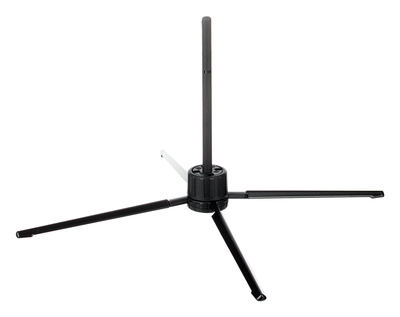
Oh, another thought! This is a general suggestion that everyone can appreciate. When I put the flute down, I figured it made more sense to have it vertical (more or less) to let the moisture run out. Also, I like having it so I can just grab it when I’m ready to play. Believe it or not, I bought an upscale toilet bowl brush holder. It’s heavy (and I weighted the bottom), looks nice and has a plastic cup iside to catch the moisture and cover the added weight. You might not want to use this at sessions because accidents can happen, but in a home, it is just great.
Good to hear that many of you struggle with the same problems as it seems. That gives hope.
I think it’s a good idea to warm up first. The sound often improves the more relaxed I am.
I have a Tipple D flute here beside my regular instrument. I’ve checked this often. No problem with the flute. I think I have to work on my skills.
Also began to swab the head after playing as you suggested and as my teacher does. A good idea (which I haven’t thought of yet) is to have the flute vertical instead of laying it on a table or the ground. A great toilet-bowl-brush-holder-construction of yours but have you ever thought of something like this:


 Seems there’s some sort of node (anti-node?) right about at that point. Another culprit as well is the F key. 'Course any key can be troublesome. . . .springs, pads. . .arrgh! If by chance she has no keys, then I withdraw my suggestions

 I had troubles with a G# key on another flute making the bottom notes fluffy, so yes, any key can be a problem.