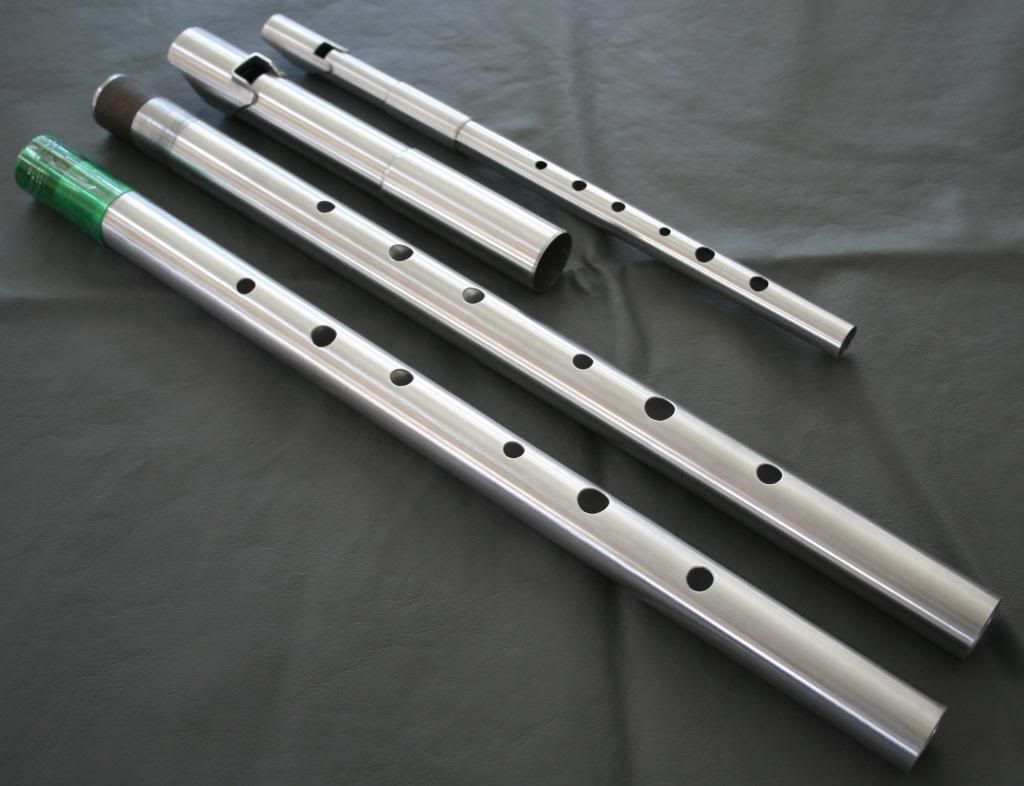
So I’ve got the Bracker tour whistles here this week. I have only had a couple opportunities to play them for any length of time and that was not enough time for these whistles. Before I go any further I would like to thank Hans for sending these whistles out on tour. Thanks, Hans. Hans has offered up one of his low D whistles with two different bodies as well as his standard bore high D whistle for C&F tour participants to play.
I have wanted to try his instruments for some time and this tour may have been the only way that I would have had to try one short of making a purchase sight unseen. I don’t get out and around as much as I once did and I have not seen or heard one of these whistles yet here on the east coast of the US.
The cliff notes version of my observations is that Hans is making good whistles. They both have strong voices with plenty of character and good response. I like them.
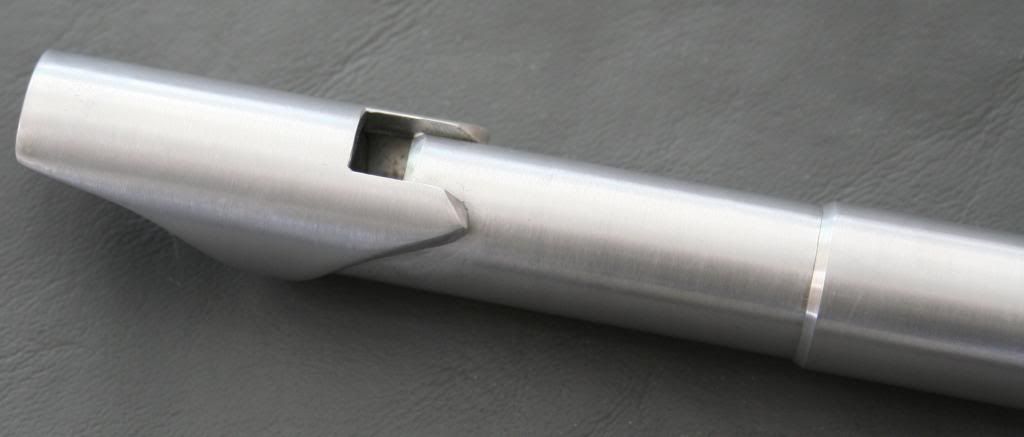
Both whistles are made entirely of aluminum tube except for a delrin plug. Both use the classic three piece head configuration where a channel in the head tube forms the windway, the plug fills the head tube and forms the windway floor and a separate piece of aluminum forms the outer mouthpiece as well as the roof of the windway. Both whistles use an external tube for the tuning slide barrel. There is a cork lining on the bodies to cushion metal on metal contact in the slides. One obvious visual difference between the high and low whistles is the use of organ ears around the window on the low D.
Hans also supplied fabric sleeves for both whistles and the extra low D body. Hans protects the corks of each bodies with a polymer sleeve that has a certain Schweppervesence to it.
The low D is bold and is a bit louder than many low D whistles. You aren’t going to hide in the corner with this whistle. It will get noticed. The timbre is full and plenty cosmic enough for my tastes. Tuning is very good. Response is very good too. Solid fingering results in a nearly percussive effect between notes. I like that.
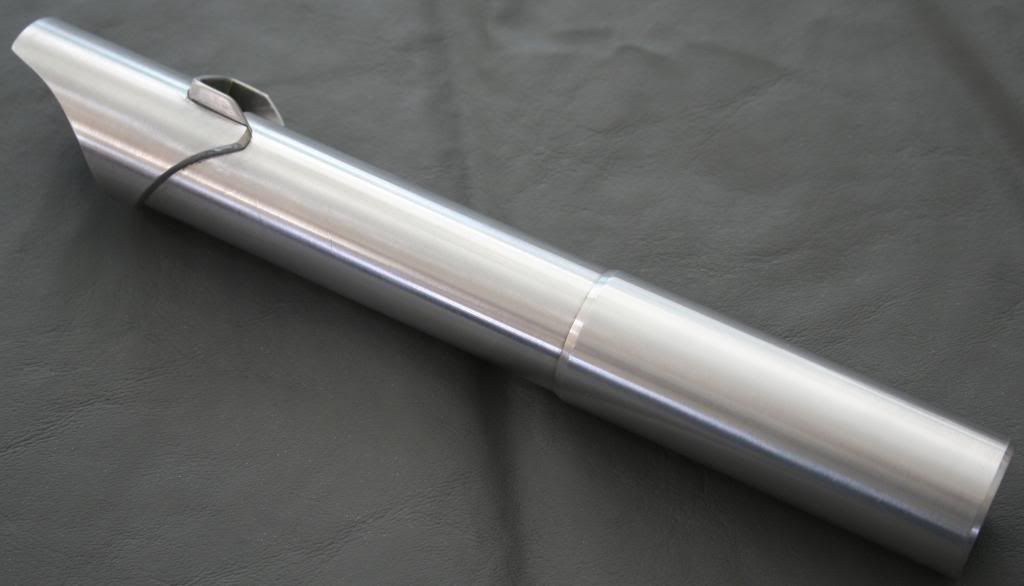
The Bracker low whistle blows freely and unconstrained. There is no noticeable back pressure. The window on the Bracker is wider than some low D’s which likely contributes to the good volume and strength of the voice. But it does use a little more air than some whistles as a result. That took some getting used to on my part. The breath curve is predictable and smooth from low to high. There was no inadvertent octave flipping on the low D. I could lean on the low notes without concern of getting very pitchy either. High notes do not require hard pushing either. Consequently the dynamic range of the whistle is better than most making this whistle capable of expressive play.
The sound of the two bodies is the same to my ears. Hole size and spacing is the same to my eyes. The C natural hole on the one tube was well tuned, strong and well place for my thumb. But I did not rely on it since the tuning was good with my customary cross fingerings and half-holing. I found the tube with the in-line holes very comfortable when played with piper’s grip right out of the gate. I favored that tube for playing. The body with the offset holes did not fit me well I am afraid. I could not play it without piper’s grip unless I used my pinky for the bottom hand. I had to place my wrists at an uncomfortable angle to use the piper’s grip which was exacerbated when covering the C natural hole. But YMMV, we all have different sized hands and fingers.
Here is a sound file, but really, the Bracker low whistle sounds better than this. You feel it in the belly as you play it. https://www.box.com/s/pgaetntvjemwnoy26084
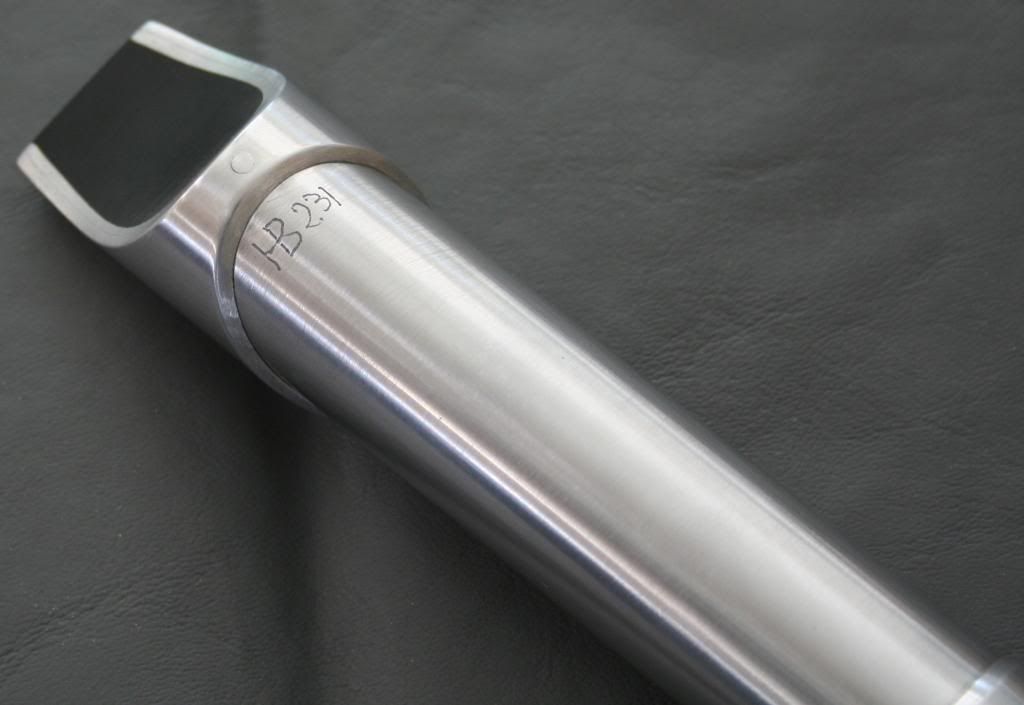
I do not really have many criticisms of this low whistle. I like the whistle. Fit and finish is good although there are some tell tale signs of hand work all over the whistle. The serial number and the whistle key are engraved freehand on the underside of the components.
The Bracker Standard high D is a cracker of a whistle. I really like this whistle. It is a very chirpy whistle. Again, this whistle won’t allow you to hide in the corner. It has a good voice and a nice crisp tone. Dynamics again are very good. I could get used to having one of these whistles in my bag.
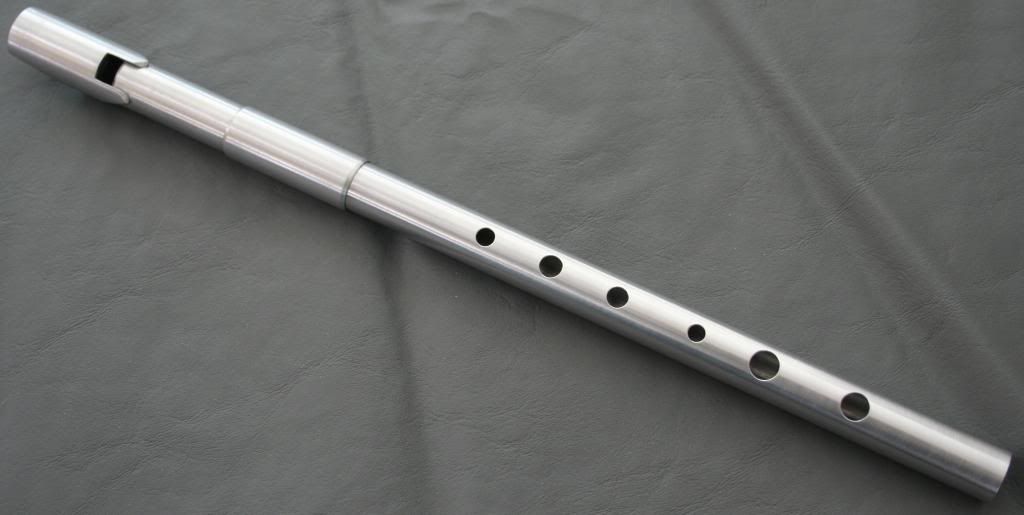
My only nit with the high D is that this particular whistle has a slide which is less firm than the low D. It did move as I played it. That had me wondering about the tuning until I realized I was pushing the slide in as I played. Again easily remedied.
I recorded a quick soundclip. https://www.box.com/s/mayoz3ps7vvzkxv7cjiw
Here’s a special note on condensation with these whistles. The temps are cool here this week. So I did expect that whistles with aluminum heads would show some condensation build up. Well, they did just that. But interestingly enough it did not cause any disruptions with playing. The head design seems to shed the moisture along the sides of the outer mouthpiece without clogging the whistle. The high D was really dripping but it had no effect on my playing. That is pretty neat, well actually it was kind of sloppy and drippy but it was rather nifty in its own way.
So all in all, Hans is making good whistles and they are well worth giving a try. Thank you Hans for letting me test them out. I’ll try to remember to include the high D in the package before I post it on to the next tourist.
Feadoggie


