At the risk of getting into trouble, I agree with you, but must also add that the Clarke Original D is like that one sweet natured girlfriend who was super nice even when I was being a first rate jerk.
I wouldn’t recommend the Clarke Original to an enemy, and as for it an option to “go to Intermediate” as in the original question posted, there’s simply no way it’s suitable (and I put Generation whistles in the same category of “never for any musician required to make progress”, after having owned a few, a C, a D, and high G and high F). From all the YouTube videos I’ve seen of Clarke products, their “Original” is their worst product and it needs to be discontinued. Maybe try their “Celtic” model. I have one of the Clarke Originals, I can see it as I type, and it’s a very poor design. It’s mouthpiece wastes a lot of air, the sound is very weak and windy, the volume is low for the effort of putting air into it (terrible idea for beginners, and totally unsuited for Intermediate players), the type of wood used in the mouthpiece is low quality, right out of the box, air leaks around the wood on the sides (100% wasted, if not also interfering with the sound production) and it’s soft absorbent wood that defeats the purpose and has a low life expectancy. Reviewers on YouTube have said the the wood block falls out after a while, because it absorbs moisture, changes shape and just breaks down. I’ve often wondered how many posts in Chiff and Fipple are posted by employees/investors/owners of Generation or Clarke, or stores that sell them exclusively. It’s an entertaining idea. At that price range, I’d advise beginners looking for a whistle that can take them to INTERMEDIATE level or those with only a few dollars for a whistle, to look for a Walton’s or a FeaDog Pro, a Tony Dixon DX001, or lower priced models by makers with high design standards, like Goldfinch, Tony Dixon, Timothy Potter (USA), Oak.
Once you get the next price range, of $30-$100 (Canadian/US), there are far more options.
I wouldn’t recommend the Clarke original either. But Generations can be great, if you find a good one. I found a red top model that seemed to have come from a new mold as it didn’t have the nicks and flaws in the mouthpiece (like many of mine have, and all in the same spots, so it is a factory issue, most likely a worn out mold). And that one plays just lovely - far better than any other Generation D that I have, including a vintage one. So they are out there. The newer ones also seem to be better than maybe two years ago. But they are all tuned slightly sharp, so one has to make them tunable.
More entertaining than supportable. I’m not in the Clarke camp - to each their own - but I’ve honestly never had what I consider to be a bad Generation. Could be the luck of the draw, but given your opinion, what then must one say of the odds? I don’t consider a blu-tac tweak, a bit of tape over a tonehole, or a rush in the bell to be deal-breakers; rare is the whistle I haven’t fiddled with, whatever the brand. I would even tweak a blackwood Abell if I thought it was called for. Tweaked or not, I considered most of my Generations entirely suited for performance, and used them accordingly without second thoughts. The only association I have with the Generation company has been in buying them for personal use, and given my experience with the product, I wouldn’t hesitate to buy one again; they’ve certainly been of good service to me.
That said, I never much cared what brand a whistle was so long as I liked what I heard out of it, so my working collection included a number of brands including a mystery whistle or two. I tend to like particular whistles for their individual characteristics; I value character over conformity. If a blemish like a nick doesn’t affect playability, it is of no consequence. And one thing I learned early on: In whistles, neither cost nor artisanship are indicators, or guarantees, of serviceability. I have played expensive, handsome, big-name whistles that I would never go back to. Clearly, my criteria are grittier than other’s might be, but I am not the only one not to be won over by external factors such as materials or cost; those are secondary, and immaterial to how the whistle acquits itself in the trenches. More important than that is one’s playing, which, once good enough, pretty much elevates any whistle, so buy a costlier whistle because you like it, but don’t be deceived that a costlier whistle will by definition pull you upward. Only you can do that, and it is regardless of what you play. TBH, to me the very concept of an “intermediate-level” whistle is entirely fallacious. Remember that the rightly-esteemed doyenne Mary Bergin spent the lion’s share of her career playing Generations. Have you ever even listened to her work, yet? If not, I recommend you drop everything right now and give her Generation playing a good listen. I promise you will find it a revelation.
Here you go:
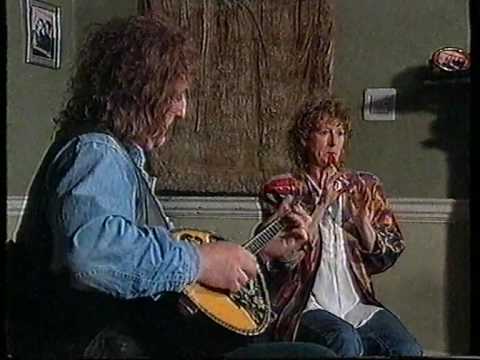
I’ve often wondered how many anti-Generation posts were from the competition. 
I would highly recommend an O’Briain Improved Feadog. This was my first whistle. Everyone defines “inexpensive” differently. I have a few of the upper tier whistles and like them very much and have no reason to disparage anyone that loves their Copelands, Sindts, or Abells. And as far as I know, the traditional Irish professionals like Sindt whistles very much. Oh, and the Improved Feadog is around $50.00 to $60.00.
I think the CO’B improved go at €35 now. But they come up for sale here regularly, got me a spare one that looked unused and as new for €20 a few weeks ago.
It is always somewhat comical, and a bit tragic, if someone comes on here, and it happens again and again, to denounce a whistle like the Generation as unplayable or ‘not a musical instrument at all’ despite the overwhelming evidence to the contrary with the finest whistleplayers we have using them.


As I said earlier on this thread, I recently tried a bunch in Custy’s and they showed the current production is just fine, I’d have no trouble playing them off the shelf. But you need to know what you’re doing and handle them gently and they will serve you well.
I have never quite taken to the Clarke but a well set up Clarke is fully functional, if perhaps a bit of an acquired taste. I have one that is as nice as any whistle but you have to make sure there are no leaks around the block and the alignments are alright. They make a good change in sound. I have have seen Peadar O’Riada and Caoimhin O’Raghallaigh play duets on them at Triur concerts in the past and that worked a treat.
Another fine example for masterful playing on a humble Generation red-top:
https://youtu.be/VcZCM2EtGuA
But admittedly the quality can vary. And IMO they sound much better as soon as the player has developed some breath control. In that aspect a Clarke Original can be more forgiving, as they don’t squeak or squeal as easily. A better choice in that style is the Shaw IMO. But it still takes the same huge amounts of air.
But admittedly the quality can vary. And IMO they sound much better as soon as the player has developed some breath control.
Almost any whistle, regardless of make will vary. But as I said, you have to be able to play them, which means not grossly overblow them . It’s a bit like a beginner buying a fiddle and returning it to the shop after a week or so saying ‘it sounds scratchy’, well ofcourse it does but that’s not the instrument’s fault is it?
I couldn’t agree more  . (sometimes the forum lacks a ‘like’-button).
I think the Gens are great value - although you only realize that once you can actually play whistles. 
Yes, mine squealed at first, but it was all down to my inexperience. 
I still like to play a tune or two on my high F too, there’s just something about it, that works for me.
I stated before that my first whistle was an improved Feadog. But, it was actually a regular Feadog that was very inexpensive and then I got the improved to see the difference. I’ve never played a Generation but with all the love they’re getting I may need to give one a go.
I wouldn’t go so far as to say “love”, myself; I could argue that in the end, Generation is just another whistle among whistles. But I will support their legitimacy every time.
I’ve said this before here I think, but it’s worth repeating. The vast majority of good-to-great whistle players I’ve heard in sessions, concerts, etc. have played one of 10 or so makes of whistle. Many play “cheapie brands” like Generation and Feadóg, both tweaked and untweaked. Sindt, Burke, Killarney, Goldie, Susato, and Dixon round out the higher end of the price spectrum. That’s not to say that those are the only good whistles out there, or that I haven’t heard good players on other whistles. But overall, I’d say 80% or so of the strong players I’ve heard have been using one of those makes.
And to be honest, the worst players always seem to have the most expensive whistles. It’s what happens when you spend too much time and money on getting the “perfect instrument” and not enough on actually learning to play properly.
There is some variety creeping in, slowly. Accessibility through online sales, Facebook etc is probably feeding this a bit although word of mouth seems to be still the way of transmission: people will take up a whistle when they’ve seen it successfully played by a player they like/admire.
Two weeks ago I saw Conal Ó’ Ghrada play a Bflat Sindt but his sister Maire played a Generation alongside him and both sounded equally well. I don’t know what anyone should read into that but I’d say it’s still the person driving the thing that matters most.
There seems a bit more variety in low whistles although I will admit I live a sheltered life an am happy to say I very rarely come across them.
Saw Marcas O’Murchu play a Clover though, talking to him later he was singing the praises of the whistle he had made in Argentina.

Mary Bergin often brings out theCopeland when she goes lower, here with Marion McCarthy who has the odd Burke for lower keys.

Yes, it’s definitely no surprise that the popular whistle makes I mention are invariably easy to find in shops (“cheapies,” Dixons, Susatos) and/or order online without a wait (Burke, Killarney, Susato, Dixon). The ones that require a bit more effort/patience to order, Goldie and Sindt, both have a certain aura around them that comes from being the chosen whistle of quite a few well-known players. Well-deserved for the most part, although sometimes the prices and talk around Sindts in particular feel like a bit of a cult!
This is Sindt territory here locally and if one can wait, buying direct its not silliness and fairly stable, meanwhile on the other hand eBay and related offerings soar upwards to whatever one is willing to pay.
In this same area I just read recently a FB posting from one of the better instructors of whistle and flute to young children that they were hoping to upgrade their whistles to Burkes. Some children compete whistling. To each their own I guess while their budgets permit. “Inexpensive” whistle is a matter of perspective to some people.
Happy Birthday girl turned 8 yrs on 9-26-2019 and honking nicely on a Roy McManus ebonite high D ever since.
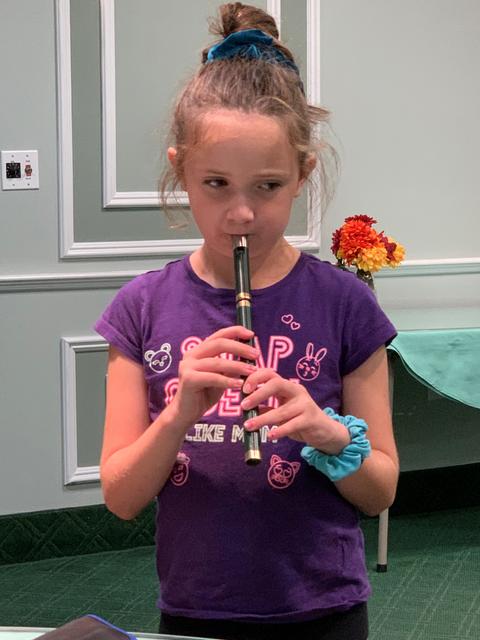
Apologies for the size.
I tend to be a bit choosier with my low whistles, but as far as the soprano D goes, I find the cheaper whistles are what give me the most of what I want. My two primary players are an old Clarke Original and a Tony Dixon trad. The Dixon is a bit more expensive than the Clarke, but it’s tuneable and still extremely affordable. I’ve had my Clarke for 15+ years … dings and all it’s one of the sweetest sounding whistles and with an easy temperament. My only issue is it muddies a bit on quicker tunes. That’s what the Dixon is for, still sweet and breathy but a little more attack. Both are easy to switch octaves and hold pitch well. Dixon is well known for being easy to overblow on the lowest note, but that’s less of an issue on the soprano D as it is in the lower whistles. I also have a brass Feadóg that’s survived several cuts in my collection. It doesn’t come out much, but there’s something pleasing about it when it does. Feadóg is also a great inexpensive choice that’s easy to control. With whistles like Feadóg and Generation, you may have to buy a couple to find “the one”, but once you do it’s worth it. Really no need to give an arm and leg for a good whistle. Find one that feels and sounds right, and you’re good to go.
-Mel
I’ve owned Sindts in A, Bb, B, C, and D and it seems to me that they play remarkably like good Generations.
Those Sindts didn’t play quite as well as the Generations I have in those keys, so I sold the Sindts.
The best old Copelands are very fine whistles- the very best Low D I’ve played is the Copeland owned by David Brewer of the band Molly’s Revenge.
Burkes are remarkable in their consistency from whistle to whistle, and across the various sizes. My issue with them is that they’re designed to favour the low notes and high B can be tricky; it’s loud, and harsh if you don’t blow it just so. Burkes also tend to have a tuning quirk where high B is sharper than low B, so if you “blow out” high B to get rid of the harsh edge it will go even sharper. I got in the habit of shading high B in slower tunes, on Burkes. (I used to have Burkes in most keys from Low D to High D, but now I just have one, in Mezzo G.)
I recently sold my Sindt. And kept my chewed ol’ Gen. My expensive High D is a Dixon Trad. Call me a sage if you want
Here again we witness the phenomena of promoting the idea that people should actually go out into the marketplace and buy many copies of a typically defective product, in the hope that one in 5 or ten or twenty, is actually worth keeping. My strong suspicion is that the company(s) that own the Generation brand are under a strong and clear trendline that is moving towards bankruptcy.
Apparently the Clarke company also saw that trendline as a possibility and decided to do something responsible and constructive about it; create some better whistles, which they did, and people seem to like the new models and established a solid place in the market for them. Bravo! But Generation can’t compete based on the merit of the product, as a company it refuses to play the game of integrity of value; from the worldwide consistent supply of customer testimonials, getting a quality Generation whistle in your hands relies either on post-sales toolshed workmanship done by the buyer with custom tools (so in effect, it’s not a Generation whistle at all), or a secondary business that will customize the whistle for you, which doubles the price of the whistle. Or, Generation relies on absurd sales advice being followed, with one in maybe 10 whistles being worth buying at all (customers seem to always say, and I’ve experienced that too), and the rest get sent to the landfill as preventable pollution and a waste of materials and energy, while those at Generation and at music stores laugh at the mindless gullibility of customers who have been fed absurd guidance. So shop around, there are dozens of whistle brands and models at inexpensive prices that will work just fine right off the shelf, and with them, you only have to buy ONE.