Beginner Ukelele?

I thought I’d share my uke experience. I’ve been learning to accompany myself on slow tunes on piano. But simple arpeggios didn’t sound “right”, like something was missing. So then I was playing with some guitar VSTs and playing the virtual guitar on my MIDI keyboard. and that had a lot of potential. So I started researching mandolin, bouzouki, guitar, etc. and I stumbled upon an idea of the ukulele. I never really liked the tiny ones so after a bit of research I decided to get a baritone. It has the same tuning as the highest four strings of a guitar, which has two huge advantages: 1 - There are tons of chords for guitar on the net and 2 - if I want to upgrade to guitar later I can use the chord shapes I already learned.

It was much easier to learn than I thought and I can already do very slow strums to accompany airs. I’m having a hard time strumming jigs & reels but I think that will come with practice.

I got a Lanikai Baritone. It was a bit sloppy with glue all over but that was easy to remove. it comes with aguila strings which are nice. I also got the Lanikai case which is very good. It’s a very fun instrument and I think Lanikai is very good for a beginner.

This may be worth looking into since you got a baritone. DADGAD is a popular Irish tuning, so maybe you’d find good results if you tried DGAD instead of DGBE?

I tried that but it just didn’t make sense to me. Some of the DADGAD chords that I found didn’t have any differences in the highest 4 strings. For example using Michael Eskin’s DADGAD chord chart:

http://www.tradlessons.com/michaeleskin/DADGAD.pdf

the ii (minor) and IV (major) have exactly the same top 4 strings. so when I was playing them, it didn’t make any sense to me that they’d be the same.

And to play in G, if one uses the capo, it raises everything a 5th. whereas in standard tuning I can play a G with 3 open strings and it has a deeper sound.

I may be missing something (if so someone please tell me) but I didn’t see much advantage to DGAD. If I did something wrong I’d be willing to try it again as I’m very curious about this tuning.

Ah, Grasshopper, truly you are growing in wisdom. :slight_smile: The same 4 notes can be many, many different chords, depending on how you hear them, use them, and name them.

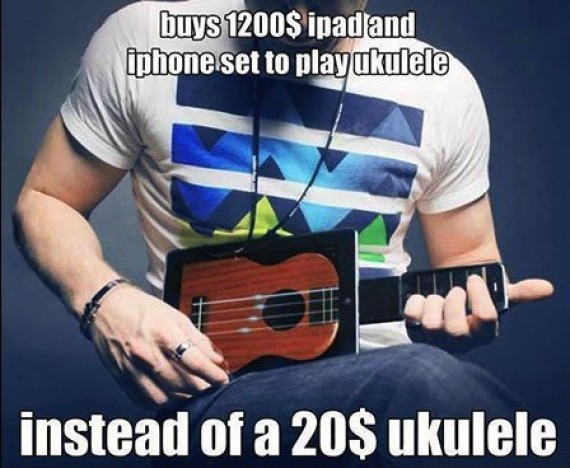
Yes, Grasshopper. But how might you play in D, with the sound of only one finger fingering?

Well yes, you’re probably missing a better understanding of harmonic theory and how chords work. That’s the problem with learning chords mechanically from a bunch of diagrams.

DGAD is just the DADGAD “high zone” (high strings) voicings. But it’s best if you can conceptualize the fingerings and voicings accordingly. For example, in the ii/IV case you mentioned, you may want to substitute a IV/add6 chord for the ii, since that effectively inverts the ii (the ii7, actually) and keeps the minor root in the voicing. Not exactly advanced stuff, but more than rote.

It’s not really a matter of “advantage” the way you probably mean it. It’s just that different tunings give you different voicings, textures and possibilities. And there’s sure no harm in experimenting, but of course there’s nothing wrong with the standard tuning either.

Oh, so that’s what the ‘MT’ part stands for. :smiley:

MT, just for kicks, would you list your curricula vitae for us one day? It would be interesting to see what one goes through to know all this stuff.

I play in a ukulele band and I was wondering what is the best whistle key to accompany a uke with re-entrant tuning in general?

Boy, that’s nearly an impossible question because a uke might play in any key, or many keys even if you exclude the less likely ones (like C#minor etc.).

You really also need to specify which re-entrant tuning you mean, since both gCEA (C tuning) and aDF#B (D tuning) have their adherents, depending on which style and time period you’re emulating. But taking a stab at it …

For a C tuned uke, the most common easy I-VI-V major ukulele keys are probably C, F and G (corresponding to G, C and D fingerings on guitar). And for those keys, a C whistle gives you considerable mileage. The C whistle alone can actually cover all three of those keys. Adding a D whistle gives you easier G fingerings, and covers the next most common easy ukulele keys of D and A major (cf. guitar A and E).

The most common easy minor keys are probably Dm, Gm and Am (cf. guitar Am, Dm and Em). The C whistle covers Dm and Am, and Gm if you half-hole the scale 6th.

For a D tuned uke, raise everything above by a whole tone. So the common keys become D, G and A major, Em, Am and Bm - all covered by a D whistle. Adding an E whistle give you E and B major, and easier A major fingerings.

So as a rule of thumb: The whistle of the same key as the name of the uke tuning is a good starting point. C whistle for C tuning, D whistle for D tuning.

Depending on the kind of music you play, you may still find yourself half-holing and cross-fingering quite a bit. Popular music (new or old) can be fairly chromatic, use harmonic and melodic minor scales, modulate to odd keys, etc. But at least the C/D (or D/E) whistle pair gives you a reasonable diatonic starting point.

Hope that helps. :wink:

On the topic of ukes:

The uke has been my money maker for the last 5 or 6 years and continues to
be my performance instrument of choice.

We are living in a golden age of ukulele at the moment with excellent sounding and playing ukulele (it’s a single/plural noun in Hawaiian) at very affordable prices. The key to finding the right instrument FOR YOU is to PLAY as many instruments as possible.

My absolute favorite ukulele in the whole wide world is a humble Lehua tenor that must have been
a ‘one-off’ or demo model because I’ve never seen or played its equal. The sound of the ukulele is
warm, fat, and punchy. The intonation is impeccable. The response, immediate and intimate. It literally outplays any Martin or Kamaka I’ve ever had the privilege to put my hands on. Professional and non-professional players marvel at its bold sound and fluid playability.

The kicker is that I only paid only $169 US for it.