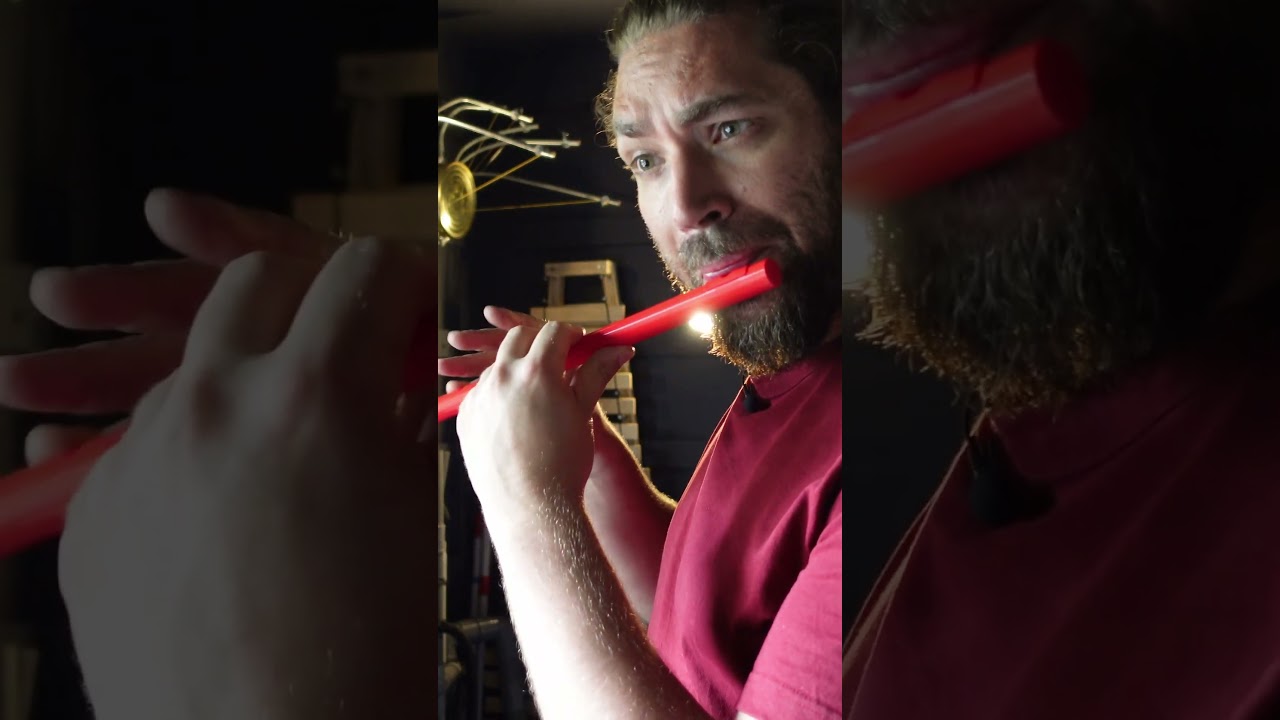
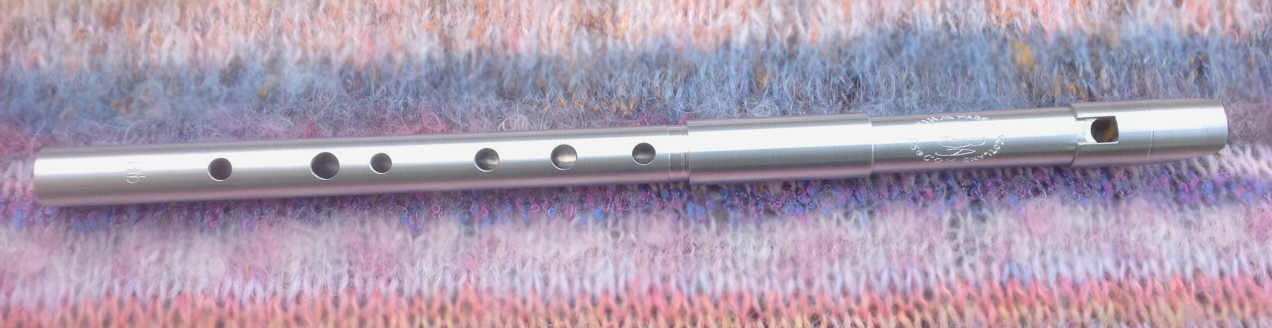
Thanks again for taking us along for the ride, Wanderer, it’s been really interesting.
Do get back to us if there are further insights and breakthroughs. We want to be the first to know here, not the last!
Thanks again for taking us along for the ride, Wanderer, it’s been really interesting.
Do get back to us if there are further insights and breakthroughs. We want to be the first to know here, not the last!
My next big innovation in the process will be switching to a .2 mm nozzle (currently using a .4 still).
It may not sound like a big leap, but a .4mm nozzle can actually make .16mm layer heights pretty cleanly and that’s what I print at. A .2mm nozzle can make then as low as .08mm. that’s pretty fine! You can actually go a smaller (.01mm for the .2mm nozzle) but usually that requires much fine tuning to make sure everything turns out really cleanly. But, once you have the settings dialed in, it’s very repeatable.
I have a .2mm nozzle sitting in a box, but I haven’t put it in yet. Some filaments (especially shiny “silk” filaments and sparkle filaments) have additives that can cause smaller nozzles to clog, and since I use both of my printers for more than whistles, I’d need solid justification (ie: plenty of sales) to warrant getting a printer devoted to .2mm nozzle prints.
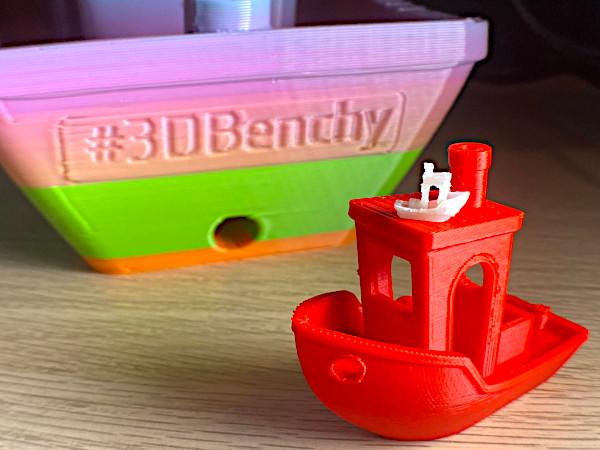
To highlight the resolution difference, this pic has a “benchy” (a little boat used to stress test printers) in both sizes. The red is .4, the white is .2. The rainbow bit in the background is a giant benchy printed with a .8 nozzle.
Heh heh, so your version of the “fine grained timbers” we so like to work!
Does it have any impact on density? Interesting to compare the weight of a current whistle and one made with the finer nozzle.
It shouldn’t have any material change in density. The melted plastic isn’t going to be compressed–just dropped down in thinner layers. It’ll just take more layers to lay out as much plastic as with a thicker nozzle. In fact, a lot of industrial guys move to a .6 nozzle, because fine details aren’t as important as knocking out a lot of parts as fast as possible.
The biggest impact on results is fit and finish–things will look and feel smoother, and you’ll be able to create thinner/smaller geometry cleanly. I’m already pretty happy with the overall feel and look at .16mm, but a smaller layer height will hopefully help with blade geometry.
The biggest impact on production is time. It will take twice as long, basically, to lay down the same amount of plastic. But since whistles are mostly hollow tubes, it’s not a huge impact like it would be for say, the fidget dragons I also make and sell. Making a half dozen whistle bodies would go from like 7 to 14 hours. But a plate of fidget dragons already takes like 18 hours to print. Moving to the smaller nozzle means it’d take a day and a half.
That’s probably the biggest reason I’ve sat on this .2 nozzle for a couple months and not installed it–I sell way more toys at my local popup markets, and with 2 printers, I just barely am able to restock inventory between them. What I really need is a 3rd printer that’s solely dedicated to those specialty things (like whistle heads) that I want to use a .2 nozzle with. I just have a hard time justifying the cost at the moment.
Can Blender be used for this? I previously used it to create a 3D model, which I then handed off for printing. However, I’m not sure if the print was made directly from the blend file or if it was transferred to another softwaree.
I don’t really use blender, but I know lots of folks in the 3d print community do.
According to this article, you should be able to export directly to a 3d-print compatible file
https://all3dp.com/2/blender-stl-files-export-for-3d-printing/
So, I’ve been thinking about this quite a bit. I have to do a fair amount of voicing when a whistle comes off the print bed to strengthen the bell note. I was wondering if some modification to a straight blade might be in order. Much harder than a curved blade to pull off, since to make a curved blade, you just cut into the tube at an angle. But my Fusion skills have been improving, and I gave it a try.

I’ve printed a few prototypes this way, and I’m happier with the overall tone. The bell note is improved and the overall volume has gone up a titch. So, I think this is the way I’m moving forward. So, that’s twice you get to tell me “i told you so!” 
And, a few weeks ago, I also modeled a C body to fit on the same head, so I will be putting C whistles and D/C sets on the website here in the next couple weeks once I get some printed in the various colors and photos made.
The first Alba whistles I saw were like that. https://www.albawhistles.com/photos/images/Bb30.jpg
It sort of makes sense because, for example, Quena blades have that curve. But then again, the Quena is played with a flutelike embouchure with a tiny focused column of air hitting just in the middle of the blade whereas on a whistle the air is emerging from the full width of the chimney and striking the full width of the blade.
In any case, when I played an Alba with the curved blade it just seemed inefficient with quite a bit of unfocused wasted air.
Stacey and/or her customers probably felt the same, because she’s since gone to straight blades.
Right off the plate, mine had some of that going on too. I would take some very small knives to the blade to clean them up, but not always with a great deal of success. I wonder if I could have alleviated the problem by making the air channel more trapezoidal to focus the stream on the middle of the blade–but it’s a moot point now, and probably not worth experimenting with.
So, I’ve made the decision to release these 3d print files for others to enjoy 
I mean, I’ll still sell whistles as festivals and such, but I figure if people have 3d printers and want to give making their own whistles a go, in the spirit of the “Lo-Tech” whistle, I can help them out by providing files for a “High-Tech” whistle 
Information can be found here:
https://makerworld.com/en/models/1078258#profileId-1069536
That could be a good business move if you don’t allow them to sell them - you could have lots of people playing them and pointing others to your online product, while most people won’t have 3D printers, or the ability to clean up the blade and holes. It’s like selling more ebooks by giving away lots of free copies during promotion campaigns - it’s crucial to gain visibility to find buyers.
Out of interest, how good’s the tone you’re getting from them compared to identical whistles made by more traditional means? I saw a youtube video a couple of weeks ago where someone made an identical 3D printed copy of a flute and then compared the two. You could easily hear the difference, which he attributed to the lesser density of the printed plastic, though maybe he just used the wrong type. I hear about 3D printed metal now, so perhaps it’s possible to fix that if it’s an issue. Or maybe the surface of the printed material just isn’t as smooth, and that could be damaging the sound.
Unfortunately, there are no “identical” whistles. Like a lot of makers, I started with some whistles I liked as a starting point, but then I changed geometry to suit the medium and my preferences.
But, you can hear the whistle here
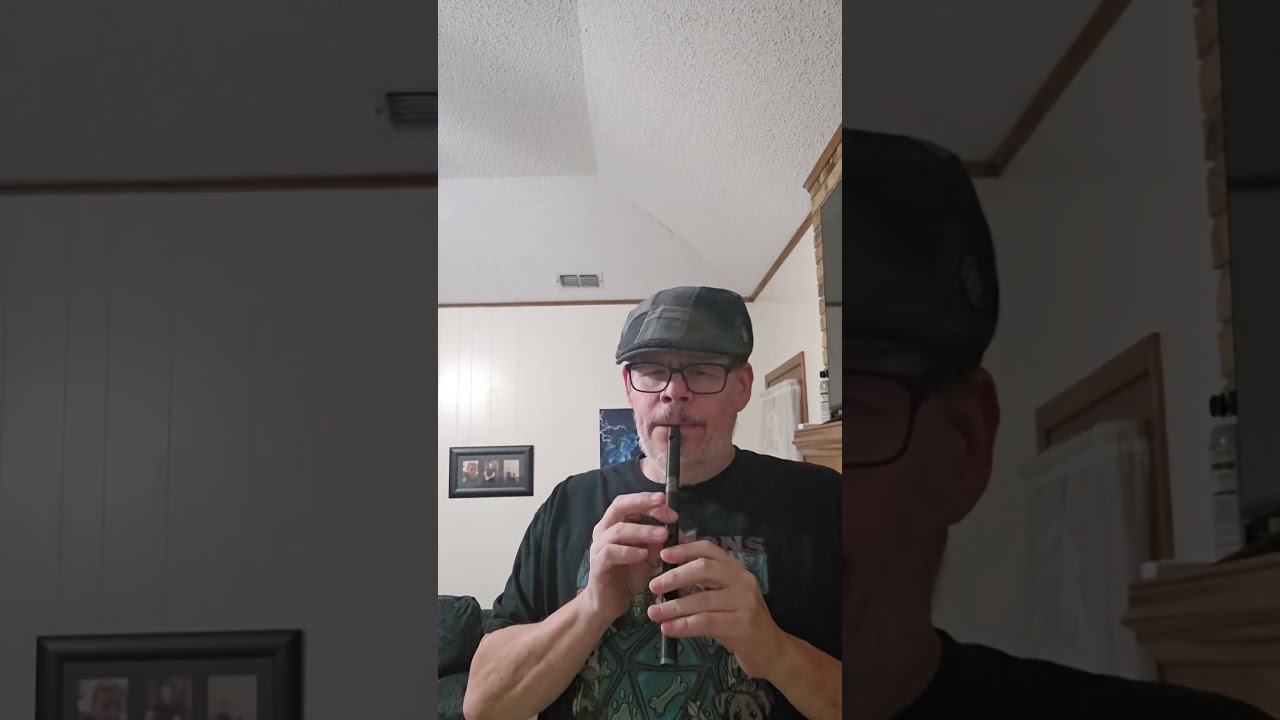
Not a 3d printed whistle..but a flute.
One of the sites I post designs to announced a contest starting in a week–the theme is “Musical Instruments”. Unfortunately, already posted designs aren’t eligible…so, I thought I’d give this a whirl.
https://youtube.com/watch?v=PEMmKL1DSLQ
Not “pro” by any stretch of the imagination…cylindrical bore, weak bottom end. But considering it’s the very first print off the machine without any tweaks, I’m a bit gratified the beginnings weren’t more humble
So, I’m going to be entering my whistle designs into a contest. The rub: you can’t enter designs that have already been published. Which is annoying because they announced the contest theme (“musical instruments”) only a few days after I published my whistle.
In any case, I went back to the drawing board to work up a new model that I could enter. And since a few people have been asking me for a 3-piece “traveler” model, I worked one up.

Some people were also having trouble printing the mouthpiece as thin as I made it at the windway area, so I thickened the outer shell by 0.4mm. But this had the side effect of making the high A and B much harder to hit cleanly! Pondering the thought, I figured I’d just flatten the area at the top of the ramp down the amount that I’d thickened the rest of the mouthpiece…and then I realized I’ve seen some whistles that are flat in that space (like one of my Dixon models). And, since I was mucking around with the mouthpiece anyway, I threw a Copeland-style wall around the windway exit, ending up with something that looks like:

It only took a few revisions to dial in all of the fine numbers on these changes…and I’m really happy with the final results!
https://www.youtube.com/watch?v=uUneMTO0nMc
The video has an integrated 3d printed tuning slide, because that was the #1 request from my first postings. People just didn’t want to buy tubing and cut it and deburr it and all that, even though a printed tuning slide would be much more delicate. So, I figure I’ll give them both options.
Sounds like a winner! Good job.
If there’s a joint between the upper and lower hand I wouldn’t want the tongue-and-groove personally.
I suppose it was years of playing a c1830 Rudall & Rose flute with a joint between the hands, but I got used to having the two hands offset a bit.
I do wish my Low Whistles were made like that. I suppose Colin Goldie could do it, but whether or not it would be worth the trouble to him I don’t know.
Well, the good thing about 3d printing is that if someone wants one without it, I can easily make it 
My 3d printed Traveler model whistle is now available for free downloading and printing. Bonus: my flute model is available too, though it still needs lots of work.
Whistle: https://makerworld.com/en/models/1148419#profileId-1152196
video: https://youtu.be/uUneMTO0nMc
Flute: https://makerworld.com/en/models/1148421#profileId-1152198
video: https://www.youtube.com/watch?v=PEMmKL1DSLQ
Thing is, we don’t know how “identical” his 3D file was to the original (wooden?) flute.
Over the years I’ve seen a large number of makers who “copy” existing instruments but when you compare the original to the copy you can see that the copying wasn’t very exact.
Then there are the exceptional makers like Michael Hubbert who, when he copies an instrument, it plays exactly like the original, with every nuance.
Casey Burns seemed to be getting great tone out of his 3D printed flutes, wasn’t he? I was hoping he would start offering those.
I’ve told the story of the prominent Baroque flute maker who had hit a brick wall, unable to get his quite exacting copy of an 18th century original to sound the same.
Then suddenly the “aha!” moment came, when he realised that his copy had a gleaming polished bore and the original didn’t.
When he roughed up the bore of his copy to match the original the exact tone of the original emerged.
I see this all the time in the Highland pipe world. I’ve owned dozens of original c1860-c1930 pipes and they NEVER have polished smooth bores. Yet the modern makers trying to copy them always use gleaming polished bores (and unsurprisingly fail to duplicate the tone of the originals).
My personal theory is that the modern concept of wood instruments having gleaming polished bores is a false analogy with metal Boehm flutes.
That’s could be at least a significant part of the difference then. It seems unlikely that a 3D printed bore would come out as smooth as it ideally would be. There could be the same issue with the windway interior surfaces of whistles not being as smooth and generating turbulence. There’s also the resolution of the 3D printer determining the size of the blobs of plastic used to make the instrument. It would be interesting to make otherwise-identical 3D printed flutes/whistles with different resolutions and to compare the sound quality against each other.
I’ve found the video I referred to in the youtube history on my phone:-